
Research Initiatives:
Conducting studies on the composition and volume of waste generated in urban and rural areas to understand specific challenges and opportunities.
Investigating the environmental and health impacts of different waste management practices to identify areas for improvement.
Analyzing the socio-economic factors influencing waste generation and management behaviors in diverse communities.
Innovative Technologies:
Developing advanced sorting and recycling technologies to efficiently separate and process various types of waste, including plastics, organic matter, and electronic waste.
Implementing sensor-based systems for smart waste management, enabling real-time monitoring of waste levels in bins and optimizing collection routes.
Exploring bioremediation techniques and microbial solutions for the treatment of organic waste, such as composting and anaerobic digestion.
Inventive Solutions:
Designing modular and scalable waste management infrastructure suitable for both urban and rural settings, considering factors like space constraints and resource availability.
Creating low-cost and DIY waste management tools and equipment using locally available materials, empowering communities to address waste challenges autonomously.
Introducing novel waste-to-energy technologies, such as pyrolysis and gasification, to convert non-recyclable waste into valuable resources like biofuels and electricity.
Development Projects:
-
- Establishing community-based waste management programs that engage residents in waste reduction, segregation, and recycling activities through education and incentives.
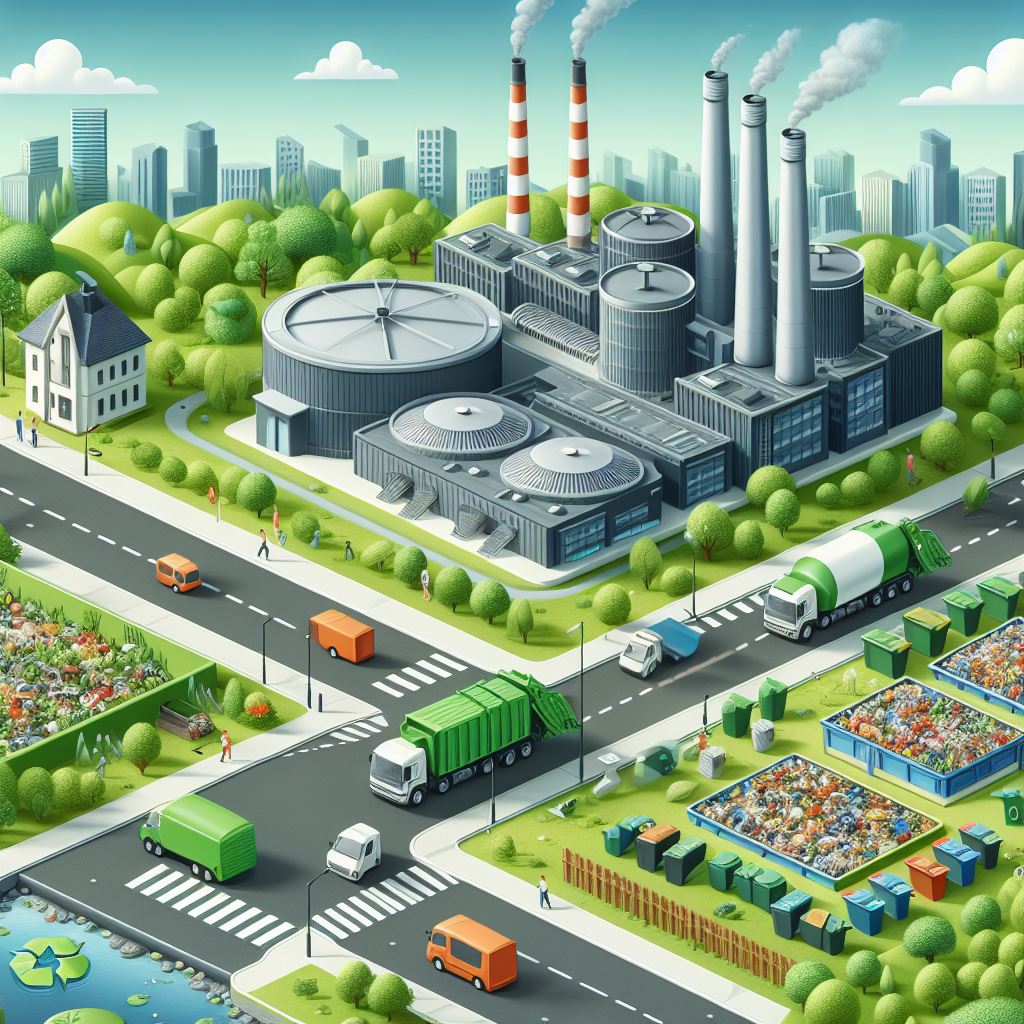
- Building integrated waste treatment facilities capable of processing mixed waste streams and producing useful by-products like biogas, fertilizers, and recycled materials.
- Collaborating with local governments, NGOs, and private stakeholders to implement comprehensive waste management policies and infrastructure upgrades in both urban and rural areas.
Top 10 Example of Waste Management Solution Around the world
Here’s a list of top 10 waste management technologies from around the world, each representing a different country:
- Sweden – Waste-to-Energy Plants: Sweden leads in waste management with its advanced waste-to-energy plants that efficiently convert municipal solid waste into heat and electricity, reducing landfill dependence and promoting renewable energy.
- Japan – Plasma Gasification: Japan employs plasma gasification technology to treat municipal solid waste, converting it into syngas and inert slag, which can be used for energy generation or further processing into valuable products.
- Germany – Mechanical-Biological Treatment (MBT): Germany utilizes MBT facilities, combining mechanical sorting with biological treatment methods like composting and anaerobic digestion to recover resources from mixed waste streams while minimizing environmental impact.
- United States – Anaerobic Digestion: Anaerobic digestion technology is widely adopted in the United States for organic waste management, producing biogas and nutrient-rich digestate as valuable by-products for energy generation and soil amendment.
- Netherlands – Source Separation and Recycling: The Netherlands emphasizes source separation and recycling initiatives, leveraging advanced sorting technologies and community engagement to achieve high recycling rates and reduce waste sent to landfills.
- Singapore – Waste-to-Energy Incineration: Singapore’s waste-to-energy incineration plants play a crucial role in waste management, incinerating solid waste to generate electricity while adhering to strict emission standards and maximizing resource recovery.
- South Korea – Smart Waste Management Systems: South Korea implements smart waste management systems equipped with IoT sensors and data analytics to optimize waste collection routes, monitor bin fill levels, and promote efficient resource allocation.
- Denmark – Waste Sorting Robots: Denmark deploys waste sorting robots in recycling facilities to automate the separation of recyclable materials from mixed waste streams, improving efficiency and quality of recycled materials.
- Finland – Circular Economy Solutions: Finland focuses on circular economy principles, emphasizing waste prevention, product redesign, and extended producer responsibility to minimize waste generation and promote resource conservation.
- Australia – Landfill Bioreactor Technology: Australia pioneers landfill bioreactor technology, enhancing landfill waste degradation through controlled leachate recirculation and microbial activity, resulting in accelerated waste decomposition and methane recovery.Converting garbage to gold presents a significant opportunity for innovation and business development in Nepal, addressing waste management challenges while creating value from discarded materials. Here are ten major ideas tailored to the Nepalese context:
- Biogas Production from Organic Waste: Establish biogas plants across Nepal to convert organic waste into biogas for cooking and electricity generation, leveraging the country’s abundant agricultural residues and urban organic waste.
- Plastic Recycling and Upcycling Ventures: Launch recycling facilities equipped with modern sorting and recycling technologies to process plastic waste into raw materials for manufacturing new products or upcycling into value-added goods like eco-friendly furniture and accessories.
- Community-Based Waste Collection and Segregation: Develop community-led waste collection and segregation initiatives, empowering local residents to separate recyclables from non-recyclable waste at the source, creating employment opportunities and fostering environmental stewardship.
- Innovative Construction Materials from Waste: Research and develop innovative construction materials, such as recycled plastic bricks, paving blocks, and composite panels, utilizing waste plastics and other locally available materials to address Nepal’s housing and infrastructure needs sustainably.
- Waste-to-Energy Projects: Implement small-scale waste-to-energy projects, such as biogas digesters and biomass gasification systems, in rural areas to provide clean energy solutions and alleviate pressure on forest resources for cooking and heating.
- Eco-Tourism and Sustainable Hospitality: Promote eco-tourism and sustainable hospitality ventures that emphasize waste reduction, recycling, and composting practices, encouraging hotels, resorts, and guesthouses to adopt green initiatives and showcase environmental stewardship.
- Mobile Recycling Units and Waste Collection Apps: Introduce mobile recycling units equipped with compact recycling machinery to serve remote communities and urban areas, complemented by waste collection apps for efficient scheduling, tracking, and payment processing.
- Educational Outreach and Awareness Campaigns: Launch educational outreach programs and awareness campaigns targeting schools, colleges, and communities to promote waste segregation, recycling, and responsible consumption habits, fostering a culture of waste reduction and environmental conservation.
- Circular Economy Business Models: Implement circular economy business models that emphasize resource recovery, product reuse, and closed-loop systems, partnering with local industries and manufacturers to design products with extended lifecycles and recyclability.
- Government and Private Sector Partnerships: Foster partnerships between government agencies, private sector entities, and non-profit organizations to support waste management innovation, providing funding, technical expertise, and regulatory support to accelerate the transition towards a circular economy.